








1926 Duesenberg Model A Touring
Inventory Number: 3062
$425,000
The Duesenberg Automobile & Motors Co., Inc., founded in 1920, was known for its luxury and high-performance
racing automobiles. In 1921, founders and brothers Fred and August Duesenberg won a
Grand Prix race with an American automobile for the first time, catapulting the Duesenberg into the
spotlight. They would go on to popularize the straight-eight engine and four-wheel hydraulic brake system, and
become the ultimate means of transportation for the rich and famous of the time. Its logo, a
detailed eagle with outspread wings featuring “Duesenberg” in ornate lettering, became a symbol of power
and prestige.
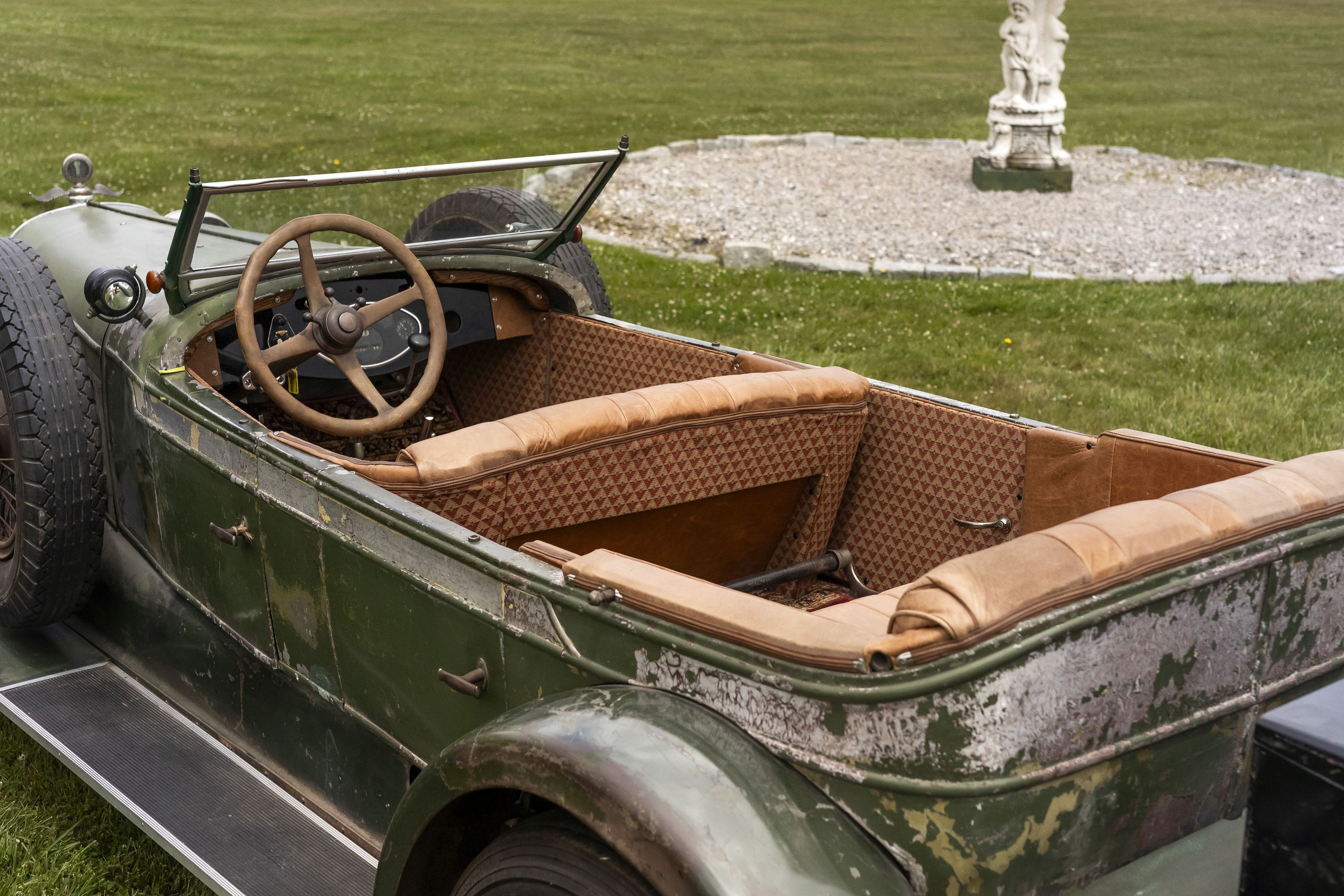
The historic significance of this car is illustrated in the article below titled “The Absolute Final Factory-Produced Model-A Duesenberg” by Dr. John Baeke, an Auburn Cord Duesenberg historian. It is not only the last one that was produced; Dr. Baeke has also uncovered a 1926 photo that he believes shows Mrs. Duesenberg sitting in the driver’s seat of this car in front of her residence. He also explains why the body is significantly lower than all other models. See the full article below.
Original frame with serial number 1202.
The Absolute Final Factory-Produced Model-A Duesenberg
By Dr. John Baeke, Auburn Cord Duesenberg historian
“The boutique motorcar companies of Fred & Augie Duesenberg and Enzo Ferrari (America and Italy, respectively) enjoyed great success and had much in common. Both excelled in the emerging technologies of overhead cams and forced induction (supercharging & turbocharging). While their performance creds appealed to the sportsmen, their designer custom coachwork attracted those desiring only the latest haute couture.
On the racetrack, both automakers dominated the competition. One thing that separated these two marques from all other manufacturers was the old mantra, ‘Win on Sunday, Sell on Monday’—meaning ‘We race to sell’—simply did NOT apply. At Duesenberg and Ferrari, it was the exact opposite. They were not bashful in admitting they manufactured passenger cars purely to support their racing programs. While at Ford and the others, they only raced to support their auto manufacturing.
At Duesenberg dealerships, customers knew the very same (albeit detuned) overhead cam 8-cylinder engines the company ran at Indy were powering their Model-A passenger cars. At Ferrari, the same 12-cylinder 250GT power plant they won at Le Mans with powered their touring cars.
For Duesenberg, all of this took a dramatic change in 1926, when magnate E. L. Cord added Duesenberg Motor Cars to his portfolio. Cord’s vision was to separate Duesenberg racing from the passenger car operation. Things changed overnight with the cessation of production of the racy Model-A and development of what would become the mighty (not just racy) Model-J. As sophisticated as the Model-J motor was, its ghastly weight left no pretensions of future racetrack success.
Thus, the Model-A Duesenberg (produced from 1921–26) marked the end of an era when an average American (granted, one with some wealth) could drive a truly race-bred passenger car.
Vehicle ID #3062 in the Shappy collection is truly special. According to the preeminent authority Fred Roe, first ACD Club Duesenberg Historian (ref. Duesenberg: The Pursuit of Perfection, F. Roe. Apdx-1, pg 277), it represents the absolute final factory-produced Model-A Duesenberg.
Car no. 1202/1594 was produced in 1926 at the Duesenberg factory in Indianapolis, Indiana. As was common for nearly all upper-crust motorcars of the 1920s, its body was designed and built by one of the custom coachbuilders of the day. In those days, Duesenberg was especially fond of Millspaugh & Irish, Rubay, Fleetwood, Locke, and Springfield. Though time has concealed this coachbuilder’s identity, certainly 1202 has the common hallmarks of the others.
As the taste of the Roaring ’20s elite became more sophisticated, coachbuilders began trimming and lowering the formerly boxy sedan and phaeton bodies and then dressed them up in colorful two-tones. This trend certainly is apparent with 1202, where its Touring (some might call it a Phaeton) body has been designed with a lower, more racy profile. This snazzy design was popular with many, not the least of which was Mrs. Fred Duesenberg.
In a photo dated 1926 and provided by historian Roe, Mrs. Duesenberg (posing in front of her home) can be seen behind the wheel of either this very car (quite likely) or an identical car. More photographic research should confirm whether 1202 is her car. The sleek profile of 1202 was further accentuated by two tones of green with a yellow belt and the stylist’s clever use of double front and rear bumpers.
As of 2023, the ownership provenance of Duesenberg 1202 has been documented back 73+ years. In 1950, Robert H. Kines, Jr. (Milledgeville, GA) purchased the Duesenberg. In 1954, he sold it to Floyd W. McCall (Charlotte, NC) in running condition for $25. Circa 1980, it was acquired by vintage car collector Royce Kershaw, Sr. (Montgomery, AL) and later inherited by his son Royce, Jr. (Montgomery, AL). In 2021, Duesenberg aficionado Richard Shappy (Providence, RI) obtained the car and immediately began a meticulous preservation-class restoration. She is still clothed in her original paint.
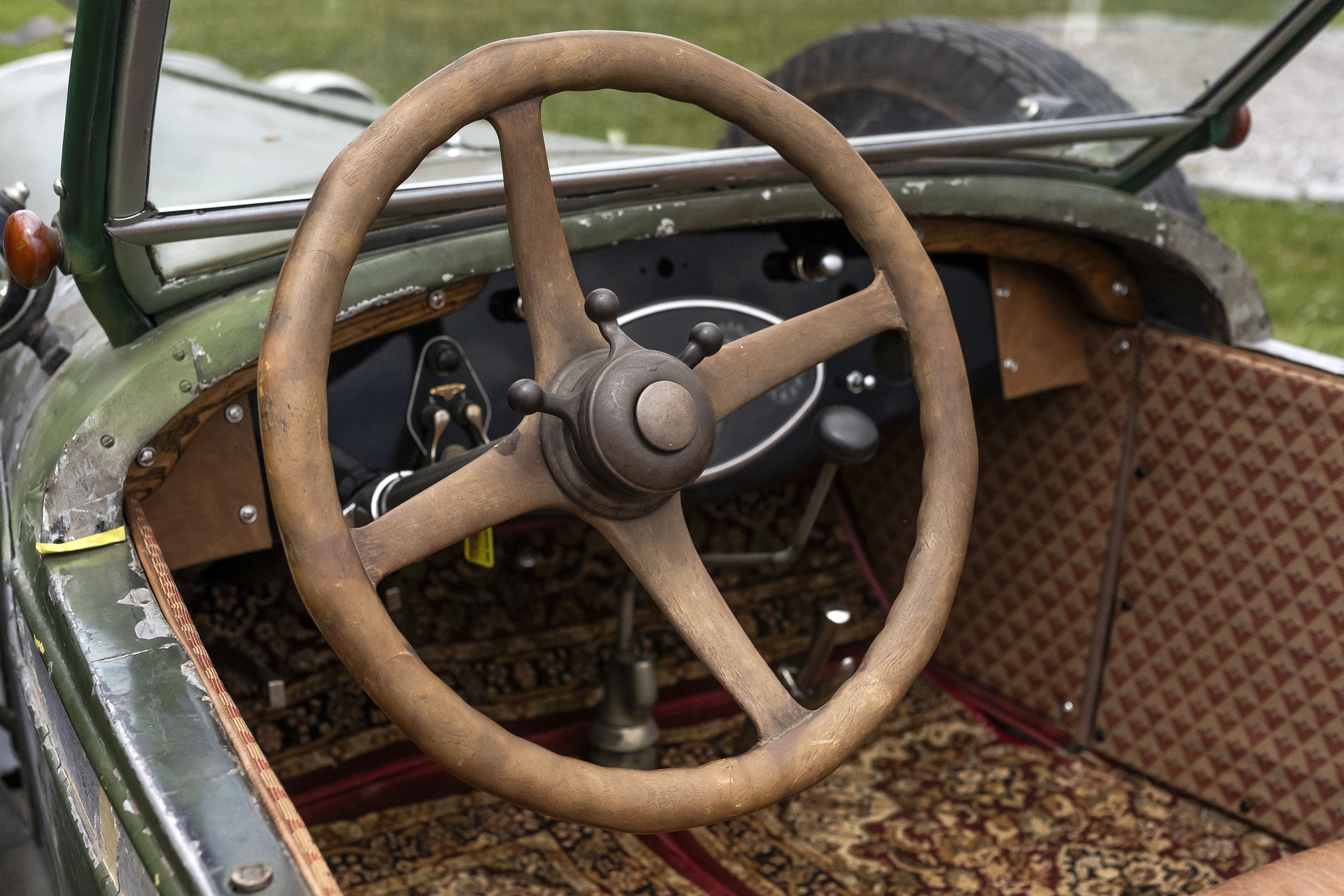
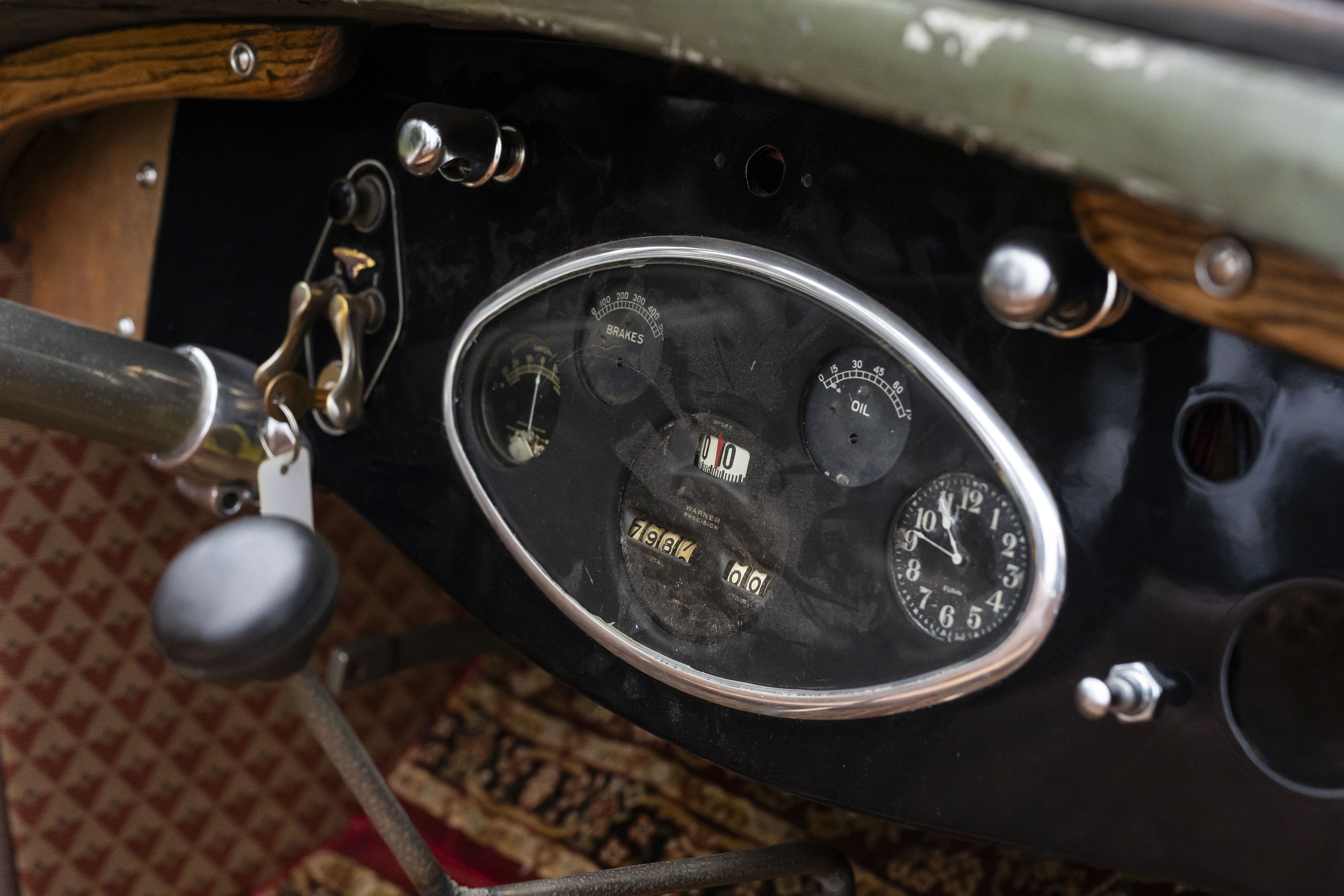
The car has remained completely original and numbers-matching, retaining its original chassis (s.n. 1202), motor (s.n. 1594), transmission, and body. This historic motorcar was 99% complete when acquired by Dick. His expert team has gone to great lengths to preserve this car’s history, even locating vintage patinaed leather upholstery.
While today 73 percent of all Model-J Duesenbergs survive, amazingly only about 6 percent of Model-A Duesenbergs survive. For this, the absolute final race-bred Model-A Duesenberg ever built, with such unique and stunning coachwork to still exist is remarkable. Each of its prior owners appreciated the car for its beauty and originality while being seemingly unaware of its historical significance. Thank you, Dick Shappy, for rescuing and preserving this treasure.”
The historic significance of this car is illustrated in the article below titled “The Absolute Final Factory-Produced Model-A Duesenberg” by Dr. John Baeke, an Auburn Cord Duesenberg historian. It is not only the last one that was produced; Dr. Baeke has also uncovered a 1926 photo that he believes shows Mrs. Duesenberg sitting in the driver’s seat of this car in front of her residence. He also explains why the body is significantly lower than all other models. See the full article below.
Original frame with serial number 1202.
The Absolute Final Factory-Produced Model-A Duesenberg
By Dr. John Baeke, Auburn Cord Duesenberg historian
“The boutique motorcar companies of Fred & Augie Duesenberg and Enzo Ferrari (America and Italy, respectively) enjoyed great success and had much in common. Both excelled in the emerging technologies of overhead cams and forced induction (supercharging & turbocharging). While their performance creds appealed to the sportsmen, their designer custom coachwork attracted those desiring only the latest haute couture.
On the racetrack, both automakers dominated the competition. One thing that separated these two marques from all other manufacturers was the old mantra, ‘Win on Sunday, Sell on Monday’—meaning ‘We race to sell’—simply did NOT apply. At Duesenberg and Ferrari, it was the exact opposite. They were not bashful in admitting they manufactured passenger cars purely to support their racing programs. While at Ford and the others, they only raced to support their auto manufacturing.
At Duesenberg dealerships, customers knew the very same (albeit detuned) overhead cam 8-cylinder engines the company ran at Indy were powering their Model-A passenger cars. At Ferrari, the same 12-cylinder 250GT power plant they won at Le Mans with powered their touring cars.
For Duesenberg, all of this took a dramatic change in 1926, when magnate E. L. Cord added Duesenberg Motor Cars to his portfolio. Cord’s vision was to separate Duesenberg racing from the passenger car operation. Things changed overnight with the cessation of production of the racy Model-A and development of what would become the mighty (not just racy) Model-J. As sophisticated as the Model-J motor was, its ghastly weight left no pretensions of future racetrack success.
Thus, the Model-A Duesenberg (produced from 1921–26) marked the end of an era when an average American (granted, one with some wealth) could drive a truly race-bred passenger car.
Vehicle ID #3062 in the Shappy collection is truly special. According to the preeminent authority Fred Roe, first ACD Club Duesenberg Historian (ref. Duesenberg: The Pursuit of Perfection, F. Roe. Apdx-1, pg 277), it represents the absolute final factory-produced Model-A Duesenberg.
Car no. 1202/1594 was produced in 1926 at the Duesenberg factory in Indianapolis, Indiana. As was common for nearly all upper-crust motorcars of the 1920s, its body was designed and built by one of the custom coachbuilders of the day. In those days, Duesenberg was especially fond of Millspaugh & Irish, Rubay, Fleetwood, Locke, and Springfield. Though time has concealed this coachbuilder’s identity, certainly 1202 has the common hallmarks of the others.
As the taste of the Roaring ’20s elite became more sophisticated, coachbuilders began trimming and lowering the formerly boxy sedan and phaeton bodies and then dressed them up in colorful two-tones. This trend certainly is apparent with 1202, where its Touring (some might call it a Phaeton) body has been designed with a lower, more racy profile. This snazzy design was popular with many, not the least of which was Mrs. Fred Duesenberg.
In a photo dated 1926 and provided by historian Roe, Mrs. Duesenberg (posing in front of her home) can be seen behind the wheel of either this very car (quite likely) or an identical car. More photographic research should confirm whether 1202 is her car. The sleek profile of 1202 was further accentuated by two tones of green with a yellow belt and the stylist’s clever use of double front and rear bumpers.
As of 2023, the ownership provenance of Duesenberg 1202 has been documented back 73+ years. In 1950, Robert H. Kines, Jr. (Milledgeville, GA) purchased the Duesenberg. In 1954, he sold it to Floyd W. McCall (Charlotte, NC) in running condition for $25. Circa 1980, it was acquired by vintage car collector Royce Kershaw, Sr. (Montgomery, AL) and later inherited by his son Royce, Jr. (Montgomery, AL). In 2021, Duesenberg aficionado Richard Shappy (Providence, RI) obtained the car and immediately began a meticulous preservation-class restoration. She is still clothed in her original paint.
The car has remained completely original and numbers-matching, retaining its original chassis (s.n. 1202), motor (s.n. 1594), transmission, and body. This historic motorcar was 99% complete when acquired by Dick. His expert team has gone to great lengths to preserve this car’s history, even locating vintage patinaed leather upholstery.
While today 73 percent of all Model-J Duesenbergs survive, amazingly only about 6 percent of Model-A Duesenbergs survive. For this, the absolute final race-bred Model-A Duesenberg ever built, with such unique and stunning coachwork to still exist is remarkable. Each of its prior owners appreciated the car for its beauty and originality while being seemingly unaware of its historical significance. Thank you, Dick Shappy, for rescuing and preserving this treasure.”